Setting guide · 03
Coastal Floating Venues
Beyond the riverbank, a dining room may depend on a sheltered anchorage, a transfer boat or a carefully engineered floating structure. The crossing becomes part of the place.
Current examples and historical context clearly separated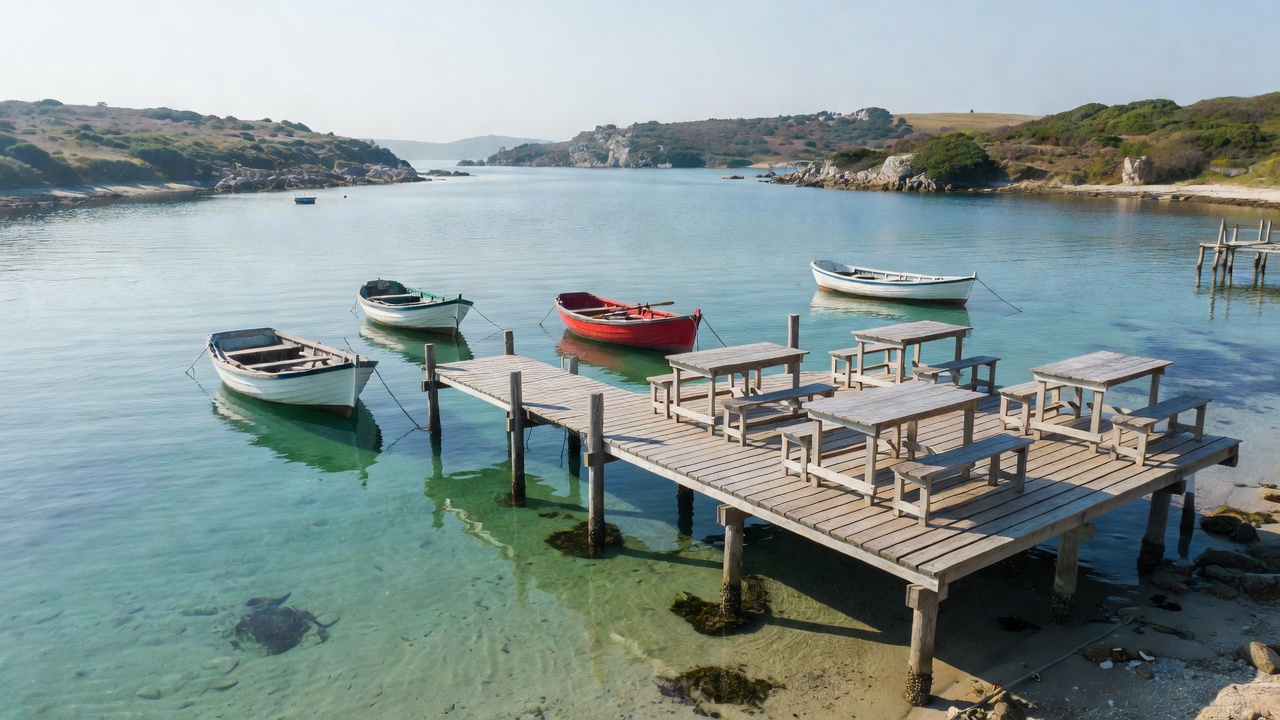
A coastal setting can make the boundary between restaurant and landscape feel particularly thin. Wind reaches an exposed deck, the waterline changes against a landing and a short transfer separates the visitor from the road. These are possible characteristics of the setting, not promises about any individual meal. A protected harbour and an exposed coastal berth can behave very differently.
The word “floating” also becomes slippery near the shore. It is often used loosely for buildings reached by a pier or for terraces that project over the water. For this guide, the distinction is physical: a floating structure is supported by buoyancy. A dramatic sea view, or even a room beneath the surface, does not establish that condition.
Norway · Floating installation
Iris at Salmon Eye
Iris is associated with Salmon Eye, the floating installation in the Hardangerfjord. The restaurant’s own information is the source for its dining format and the journey to the structure.
This is a useful example of purpose-built floating architecture rather than a conventional passenger vessel repurposed as a restaurant. Check all transfer arrangements directly.
Operator source: Iris →Norway · Fixed comparison
Under is not floating
Under is a partially submerged restaurant with a fixed structure. It belongs in a discussion of unusual coastal dining, but not in a list that treats every venue as buoyant.
The comparison is instructive: being close to water, surrounded by it or below its surface describes a view and a position, not the way a building is supported.
Operator source: Under →A fjord meal begins before the table
For a destination reached by water, the transfer should be treated as part of the visit rather than a footnote. Ask where the journey begins, what is included in the arrangement and how changing conditions affect it. If you have mobility needs, ask about each stage: the shore departure, the transfer vessel, the arrival platform and the route to the table.
A floating structure may look substantial in photographs while still presenting a boarding threshold that matters to a particular visitor. Equally, the unusual architecture should not lead to unsupported assumptions about discomfort or danger. Get operational answers from the people responsible for the venue, and distinguish those answers from an architectural impression.
Lan Ha Bay: dining within a working waterscape
Lan Ha Bay, beside Cat Ba in Vietnam, is associated with floating communities and aquaculture as well as visitor excursions. The setting offers a useful way to think about seafood meals on platforms: food, livelihood and water space can be closely connected, but not every working platform is a public restaurant.
We do not name an individual platform as currently open to visitors. That would require a reliable identification and current local confirmation. If a trip includes a seafood stop, ask the organiser for the venue’s name, what the meal includes, how costs are calculated and how the transfer works. Photographs of baskets, cages or a floating deck cannot answer those questions.
Be considerate about entering working spaces. Do not assume that a household, fish farm or landing is available for exploration because it appears in a sightseeing itinerary. Follow local instructions, ask permission before photographing people closely and avoid making environmental claims about seafood merely because it is served near the water.
Hong Kong: a famous name is not an open table
Jumbo Floating Restaurant was a prominent part of Hong Kong’s Aberdeen harbour imagery. It ceased operating in 2020. In June 2022, reports that it had capsized while being towed away became international news. It must not be presented as a restaurant that travellers can now reserve through this guide.
The historical example matters because travel lists often outlive the places they describe. A recognisable photograph can circulate long after a venue’s circumstances have changed. When researching floating restaurants, check whether a source is discussing a current service, a former landmark or a memory of a neighbourhood.
Aberdeen’s maritime identity is broader than one dining landmark. Harbour transport, fishing histories and contemporary neighbourhood life deserve attention in their own right. Destination information can help establish that wider context, but it should not be mistaken for a confirmation that a particular historic restaurant still operates.
Plan around the water, without romanticising it
Coastal dining may reward flexibility. Check footwear guidance, exposure on the transfer and whether your return is tied to a scheduled boat. If you are sensitive to motion, explain that concern before paying; neither the word “fjord” nor “harbour” guarantees a still crossing.
Also ask what happens when conditions change. An operator may adapt a transfer or service, but no editorial guide can promise a cancellation decision, a refund or a substitute itinerary. Read the current terms and keep the relevant contact details available offline. The most satisfying coastal meal begins with a clear understanding of how you will arrive and leave.
| Example | How to describe it | Planning implication |
|---|---|---|
| Iris / Salmon Eye | Dining in a floating installation | Confirm the full transfer itinerary |
| Under | Fixed, partially submerged restaurant | Do not classify it as a floating venue |
| Lan Ha Bay platforms | A setting category, not a verified venue list | Identify the actual operator first |
| Jumbo | Historical restaurant example | Not a current dining recommendation |